Free shipping over $100

At Hangout Lighting, we see swag lighting used not just for convenience, but for design control. Choosing the right chain, fixture style and globe size allows you to place light exactly where you want it, shape how it moves across a ceiling and create installations that feel intentional rather than improvised.

A swag light can transform a space when it’s planned thoughtfully. Rather than focusing on how to hang one, this guide looks at the more important question: what to choose before installation.

What Is a Swag Chain Light Fixture?

A swag chain light fixture hangs from a decorative chain and ceiling hooks rather than a fixed junction box, allowing the light to travel across the ceiling before dropping into place. 

This flexibility makes swag lighting ideal for spanning surfaces, centering light or creating sculptural focal points, with the chain and hooks intentionally part of the design. Common variations include:

  • A single swag pendant light used to center light over a table or seating area
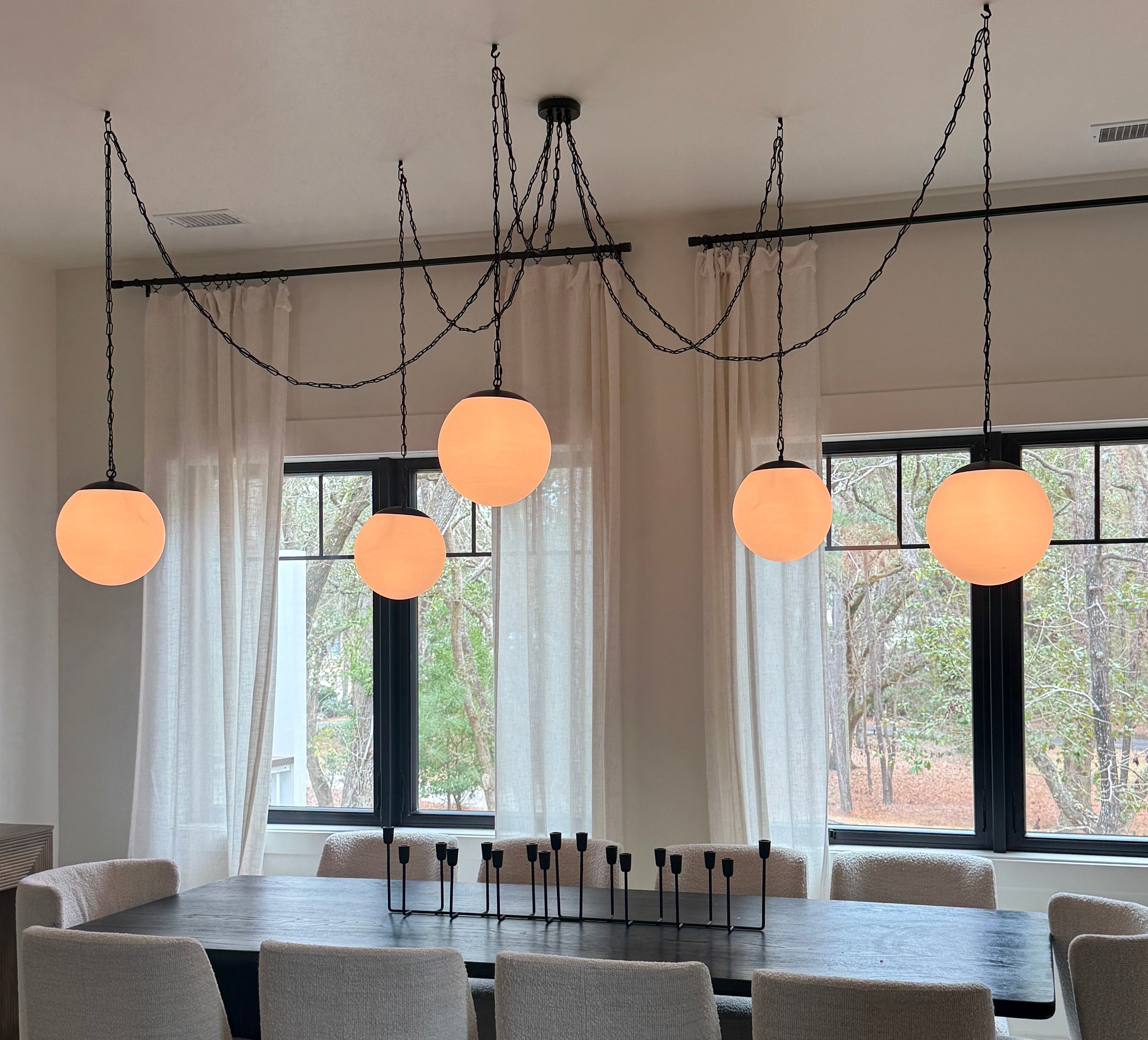
  • A multi-light pendant swag that spans long dining tables or kitchen islands
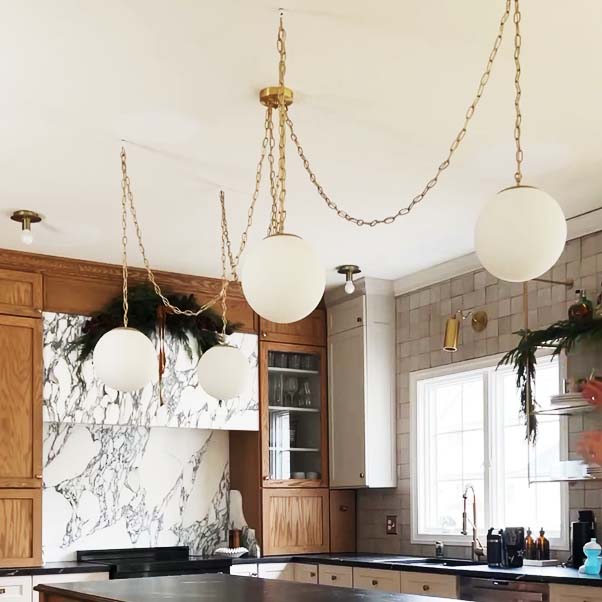
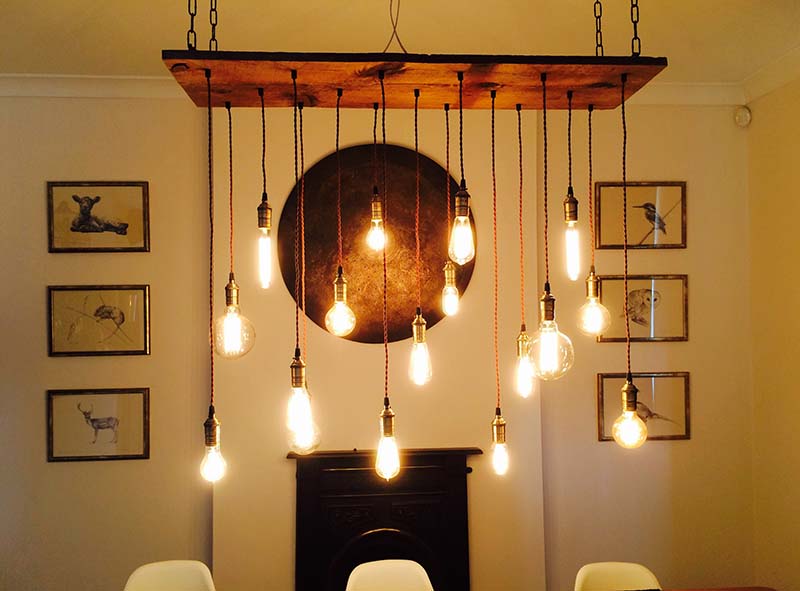
  • A globe swag chain light used as a sculptural focal point in open-plan rooms

Why People Choose Swag Chain Light Fixtures

Swag chain lighting offers layout flexibility and visual control beyond simple convenience. It allows light to be placed where it’s needed, without rewiring, while opening up creative possibilities that fixed fixtures can’t provide.

Instead of being locked to one ceiling junction box, a swag setup allows you to:

  • Distribute light across the ceiling using multiple hook points
  • Control spacing, height and rhythm between pendants
  • Build larger, room-spanning installations from simple components
  • Adapt layouts to furniture placement or architectural constraints

The chain itself becomes a design element. Its finish, thickness and drape set the mood, making swag pendants ideal for dining rooms, stairways, lofts, and open-plan spaces where balance matters. 

How to Choose the Right Chain for Your Swag Light Fixture

Short answer: Choose your chain based on

  1. the weight and scale of the fixture,
  2. the proportions of the space and
  3. the visual statement you want the installation to make.

Both metal and thick-link resin chains work equally well for swag installations. The choice is purely visual, decide whether the chain should blend in or stand out and let that guide the rest.

Thick-link resin vs. Metal Chain: Which Is Right for Your Project?

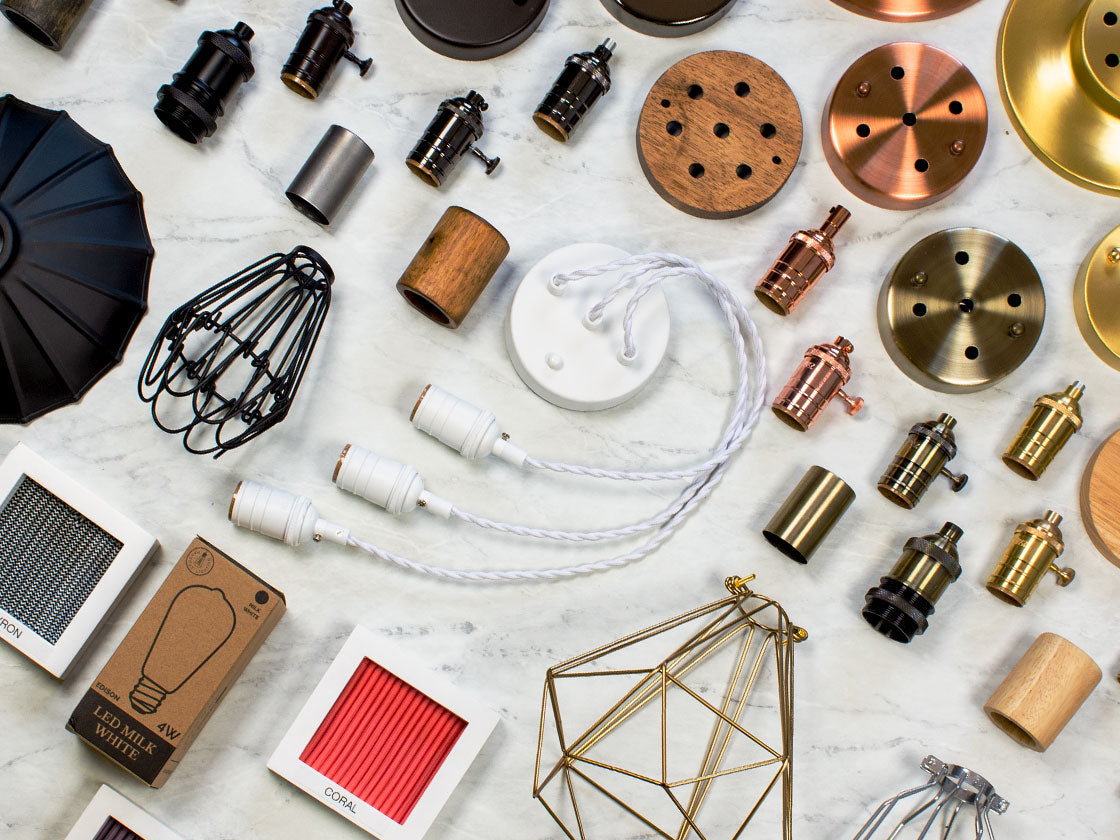
This isn’t a question of strength or durability, it’s a visual choice. Both materials suit single pendants, multi-light layouts and large swag installations. At Hangout Lighting, we offer one metal chain size and one thick-link resin chain size, each designed to keep proportions balanced with our fixtures.

Metal Chain

Metal chain reads as refined and intentional. It creates clear lines without overwhelming the fixture, allowing the shade and globe to remain the focus.

  • Clean, modern, architectural appearance
  • Visual interest comes from finish (black, brass, antique, nickel)
  • Reads as clear and defined rather than bulky
  • Supports the fixture without overpowering it

Metal chains work best in spaces where restraint and balance matter: modern kitchens, minimal dining rooms or interiors where lighting should feel integrated rather than decorative.

Thick-link resin Chain

Thick-link resin chains introduce personality. Its thicker profile and color options make it immediately noticeable, turning the suspension system into a design feature.

  • Thicker profile with stronger visual weight
  • Color becomes a primary design element
  • More graphic and expressive
  • The chain becomes part of the statement

Thick-link resin chains are ideal when you want lighting to feel playful, bold or intentionally unconventional. 

Styling Your Swag: Design Ideas and Inspiration

The Dramatic Drape

Long chains with deep swags add movement and visual drama, especially in dining rooms or living spaces with higher ceilings. The pronounced drape creates elegant arcs that draw the eye across the ceiling, making the installation feel connected and expansive. 

The Corner Accent

A swag chain light fixture is an excellent solution for dark corners or awkward layouts. By swaging the fixture away from the junction box, you can create a reading nook, accent chair moment or side table vignette that feels intentional and cozy.

The Minimalist Line (Cord-Based)

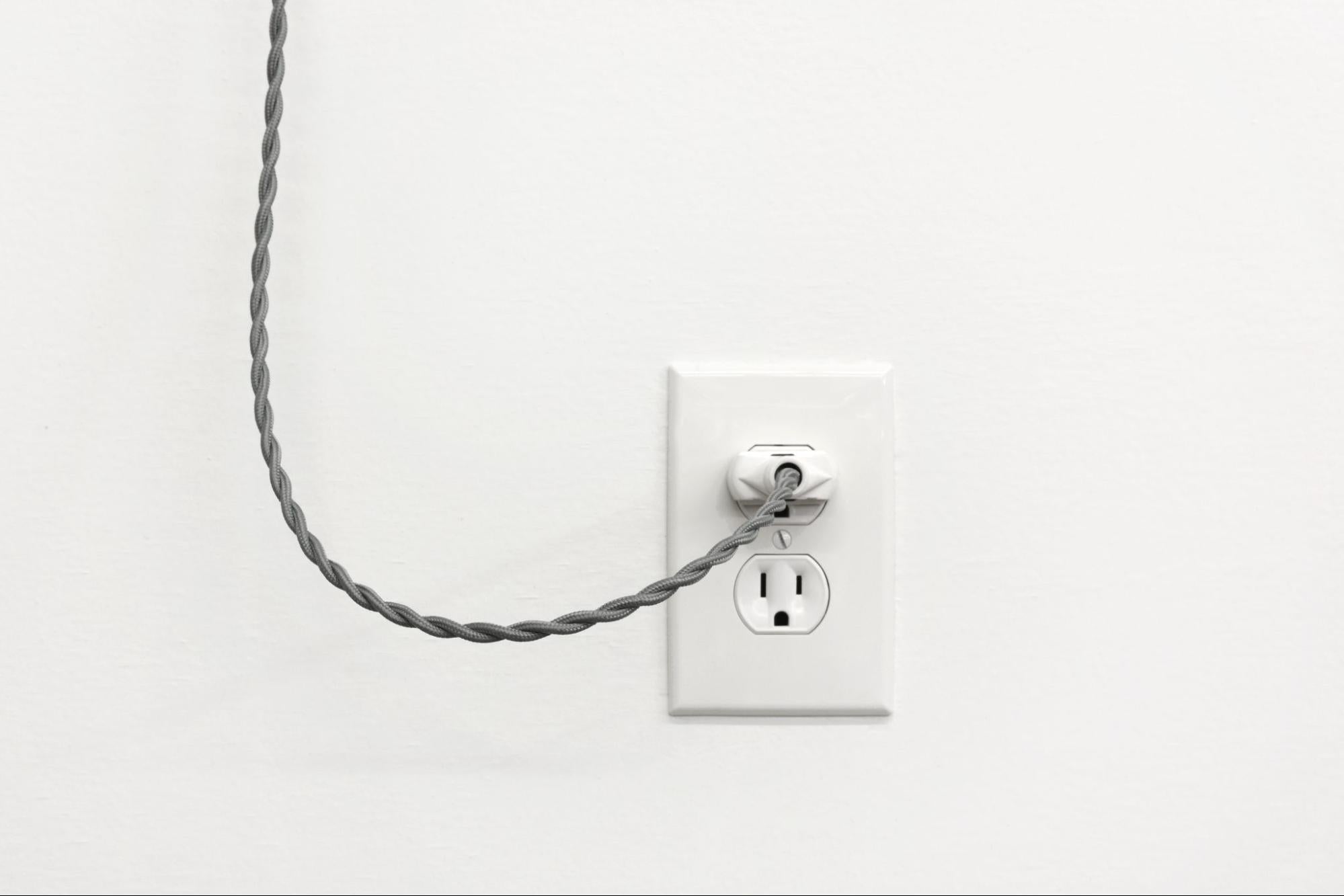
For clean, linear layouts that follow walls or ceilings precisely, at Hangout Lighting we recommend cord swags rather than chains. Cord stays allow straight, controlled runs that suit modern, architectural interiors where geometry matters more than drape.

How to Choose the Right Chain Length

A common misconception about swag lighting is that a longer chain means a lower-hanging light. In reality, chain length refers to the total chain provided, not the final drop height. Extra chain can:

  • Be used to create swag between hooks
  • Be shortened during installation
  • Be distributed across multiple ceiling points

More chain equals more layout options, not a lower fixture.

Quick Rules of Thumb

  • Standard ceilings (8-9 ft): shorter chain is usually sufficient
  • Taller ceilings (10-12 ft): longer chain adds breathing room
  • Large rooms: choose more chain than ceiling height alone suggests
  • Multiple pendants: staggered lengths almost always look better

When in doubt, size up. Extra chain length gives flexibility during installation and allows the design to evolve.

If you want a more precise recommendation based on your exact ceiling height and layout, you can use our length calculator. It helps translate your room dimensions into a practical chain length before ordering. 

Ceiling Height

8–10 ft ceilings
2–3 pendants: 4–8 ft
4–5 pendants: 6–10 ft
7 pendants: 6–10 ft

10–12 ft ceilings
2–3 pendants: 6–10 ft
4–5 pendants: 6–10 ft
7 pendants: 10–15 ft

12 ft+ ceilings
All configurations: 10–15 ft

A Step-by-Step Guide to Hanging Your Swag Pendant Light

  • Step 1: Plan Your Layout
    Decide where the pendants should visually land, not just where the junction box is. Swag lighting is about balance and proportion. To plan intentionally, use this formula:
    Total length = distance out + swag drop + pendant drop
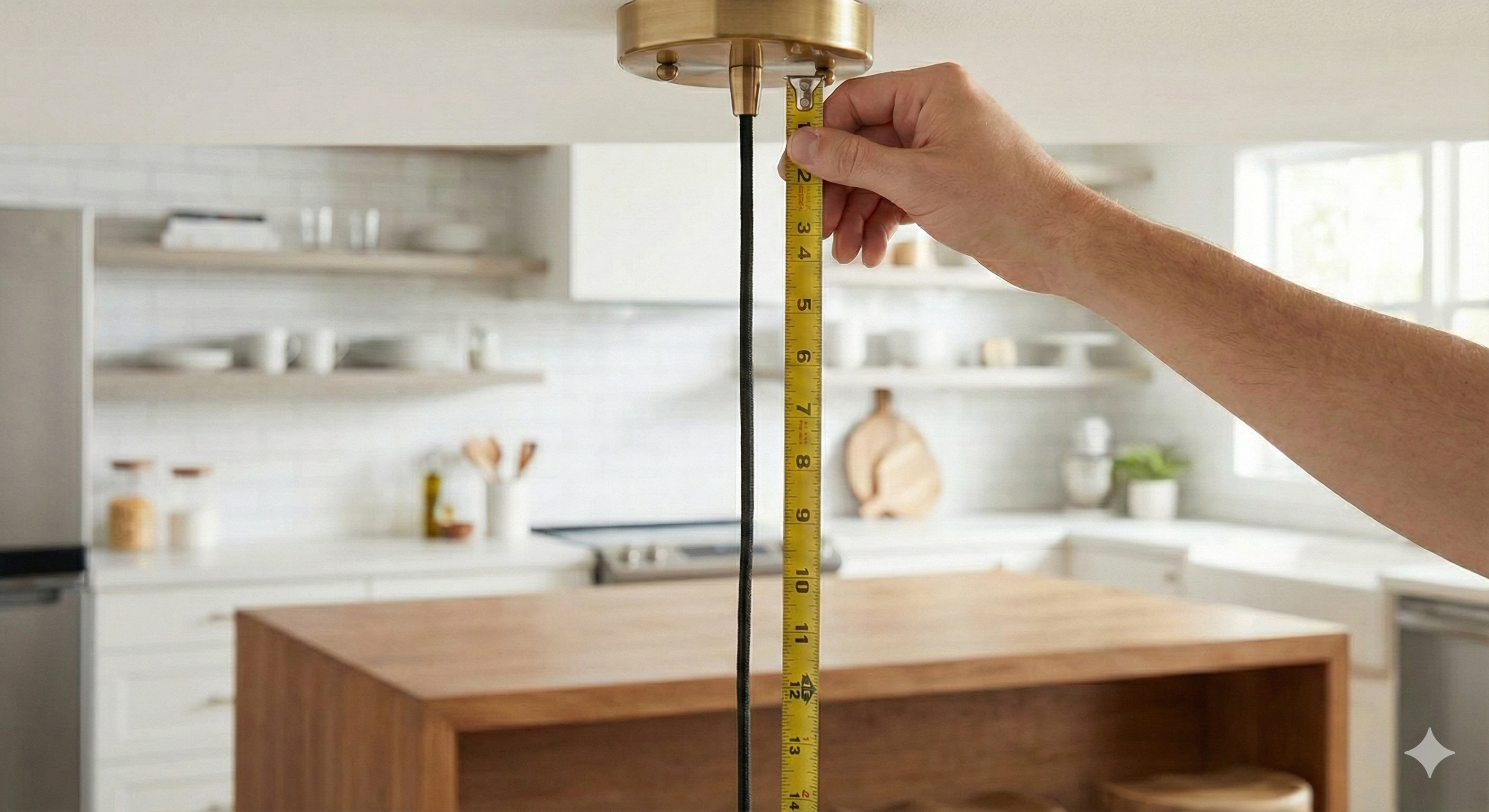
  • Step 2: Measure Before Ordering
    Confirm all measurements before ordering. Fixtures arrive fully wired, so accurate planning avoids later adjustments.
  • Step 3: Locate the Pendants
    Pendants typically weigh under 5 lbs and can be anchored with drywall anchors. Placement is guided by visual balance and furniture layout.
  • Step 4: Install the Hooks
    Install swag hooks along the planned path. They define the rhythm, drape, and overall flow of the installation.
  • Step 5: Adjust Swag and Height
    Distribute the chain to fine-tune swag depth and pendant height for the desired visual effect.
  • Step 6: Install and Test
    Most Hangout Lighting installations are hardwired and should be completed by a licensed electrician. Power on, test and make final adjustments. 

How to Choose the Right Globe Shade Size

Globe diameter is typically selected based on the scale of the room and the number of pendants in the installation. At Hangout Lighting, customers most often choose between globe diameters ranging from 6 inches to 16 inches, including 6", 8", 10", 12", 14" and 16" options.

These choices affect proportion but not brightness. Understanding globe light sizes helps ensure the fixture feels balanced within the space. Color temperature and brightness: 

  • Warm White (2700K): relaxed, inviting spaces
  • Neutral White (4000K): kitchens and task areas
  • Daylight (5000K+): utility or work-focused spaces

Keep in mind: Brightness is measured in lumens, not watts. 

For white globe shades, the Hangout Lighting experts recommend adjustable CCT LED bulbs (2700K - 5000K), allowing you to experience different tones in your own space before committing.

Clear vs. white (frosted) globes

  • Clear glass: sculptural, dramatic, visible bulb
  • White glass: soft, diffused light with no visible bulb

With white glass shades, the bulb disappears entirely, creating a calm, even glow.

Design with Confidence

A well-planned swag installation offers you freedom, placing light where it belongs, shaping how it moves through the space and creating an intentional layout. Whether you’re choosing a plug-in or sculptural swag pendant, understanding how each component works together is key.

At Hangout Lighting, lighting is meant to adapt to your space, your layout and your life, not the other way around.

FAQs - Frequently Asked Questions

How do I know what globe size I need?

Globe size should be selected based on ceiling height, room scale and the total number of pendants in the layout. The goal is to keep the overall visual volume of the globes proportional to the space.

For standard 8 - 9 ft ceilings, most installations look balanced with 6" - 10" globes. In rooms with taller ceilings (10 - 12 ft+), larger globes such as 12" to 16" can create better visual presence without feeling crowded.

Pendant quantity also matters. If you are installing only 2 - 3 pendants in a smaller space, you can often size up slightly on the globe diameter because the total visual weight remains balanced. With larger multi-pendant layouts (5+ lights), slightly smaller globes usually create a cleaner, more proportional look.

At Hangout Lighting, mixed globe sizes are also an intentional design option. Varying diameters can add rhythm and visual movement when planned carefully. When in doubt, consider the total “globe volume” in the room rather than choosing based on diameter alone.

How do I know how many pendants I need?

The ideal pendant count depends primarily on the length of the surface you’re lighting and the scale of the room. In most residential installations, pendant groupings follow predictable patterns.

For smaller tables, islands or compact spaces, 3 - 4 pendants typically provide balanced coverage. Many standard kitchen islands and dining tables look best with 5 pendants, which is the most common configuration. Larger islands, long dining tables or open commercial-style layouts can support 7 pendants or more without feeling crowded.

Spacing and rhythm matter just as much as quantity. Even spacing across the surface usually creates the cleanest result, while slightly staggered layouts can add a more custom, design-forward feel. When planning, always consider the relationship between pendant count, globe size and total fixture width to maintain proper proportion. 

How low should a swag lamp be?

Over tables and kitchen islands: typically 30 - 36 inches above the surface. Find more information about it in our pendant and chandelier length guide

How long should a chandelier chain be and how do I know what chain lights I need?

Chain length should be chosen based on ceiling height, layout width and how much swag movement you want to create across the ceiling. Importantly, chain length refers to the total available chain, not the final hanging height of the fixture.

For standard ceilings (8 - 9 ft), a chain length of approximately 3 - 6 ft per pendant is typically sufficient for most single-pendant or small multi-light layouts. Taller ceilings (10 - 12 ft+) typically benefit from chains of 6 - 10 ft or more to allow deeper swags and more breathing room across the ceiling plane.

If you are installing multiple pendants or planning a wide-span layout, sizing up on chain length is almost always the safer choice. Extra chain can be redistributed between hooks, shortened during installation or used to create more dramatic drape. Too little chain, however, limits layout options. If you want a more exact recommendation, you can use our length calculator to match your ceiling height and layout to the right chain length before ordering.

Which chain style should I choose for my swag light?

Choose chain style based on the visual statement you want to create. Metal chain reads refined and architectural, while thick-link resin chain creates a more graphic, expressive look. Both perform equally well structurally, so the decision should support the overall design direction of your space.


Tell us about your space and what you're envisioning

We'll guide you through layout, ceiling height, finish selections, and the elements that bring it all together.

This site is protected by hCaptcha and the hCaptcha Privacy Policy and Terms of Service apply.