Free shipping over $100

Your entryway is the first moment your home creates. Before anyone sees your living room, your kitchen or your personal style, they experience your foyer. That’s why entry foyer lighting matters so much. It sets the emotional tone, defines the space and quietly communicates whether a home feels warm and intentional or flat and overlooked.

Done right, lighting highlights architecture, creates depth and makes even a simple entry feel elevated. Done wrong, it can make the space feel smaller, harsher or disconnected from the rest of the home. The good news? Most mistakes are easy to fix once you know what to look for.

Mistake 1: Relying on a Single, Flat Light Source

A single overhead fixture might feel like the easiest choice, but it often creates uneven lighting that works against the space. Shadows collect in corners, the ceiling feels flat and the entry lacks dimension.

This is especially noticeable in larger entryway foyer lighting setups or homes where the entry connects visually to stairwell lighting or adjacent rooms. One light simply isn’t enough to carry the space. Instead, think in terms of distribution. Light should move through the room, not sit in one spot.

What works better:

  • Multiple pendants to spread light evenly
  • Layered fixtures that create depth
  • Strategically placed lighting that reduces shadows

Even a subtle shift, from one fixture to two, can completely change how your foyer feels.

Mistake 2: Choosing the Wrong Fixture Size or Scale

Scale is one of the most common issues in entry foyer lighting. A fixture that’s too small feels insignificant, while one that’s too large overwhelms the space. A helpful starting point for foyer lighting size and how to determine foyer light size:

  • Add the length and width of your foyer (in feet)
  • Convert that number to inches
  • Use that as your fixture’s approximate diameter

But good design goes beyond numbers. You also need to consider how the fixture feels in the space. In taller foyers, especially those with ceilings over 12 feet, visual weight becomes critical. A small, flat fixture won’t hold its own. You need something that carries presence, whether through vertical length, multiple light sources or layered structure.

To get the scale right:

  • Consider height as much as width
  • Use clusters or multi-light fixtures for added presence
  • Think about how the fixture fills the vertical space 

Mistake 3: Incorrect Hanging Height and Clearance

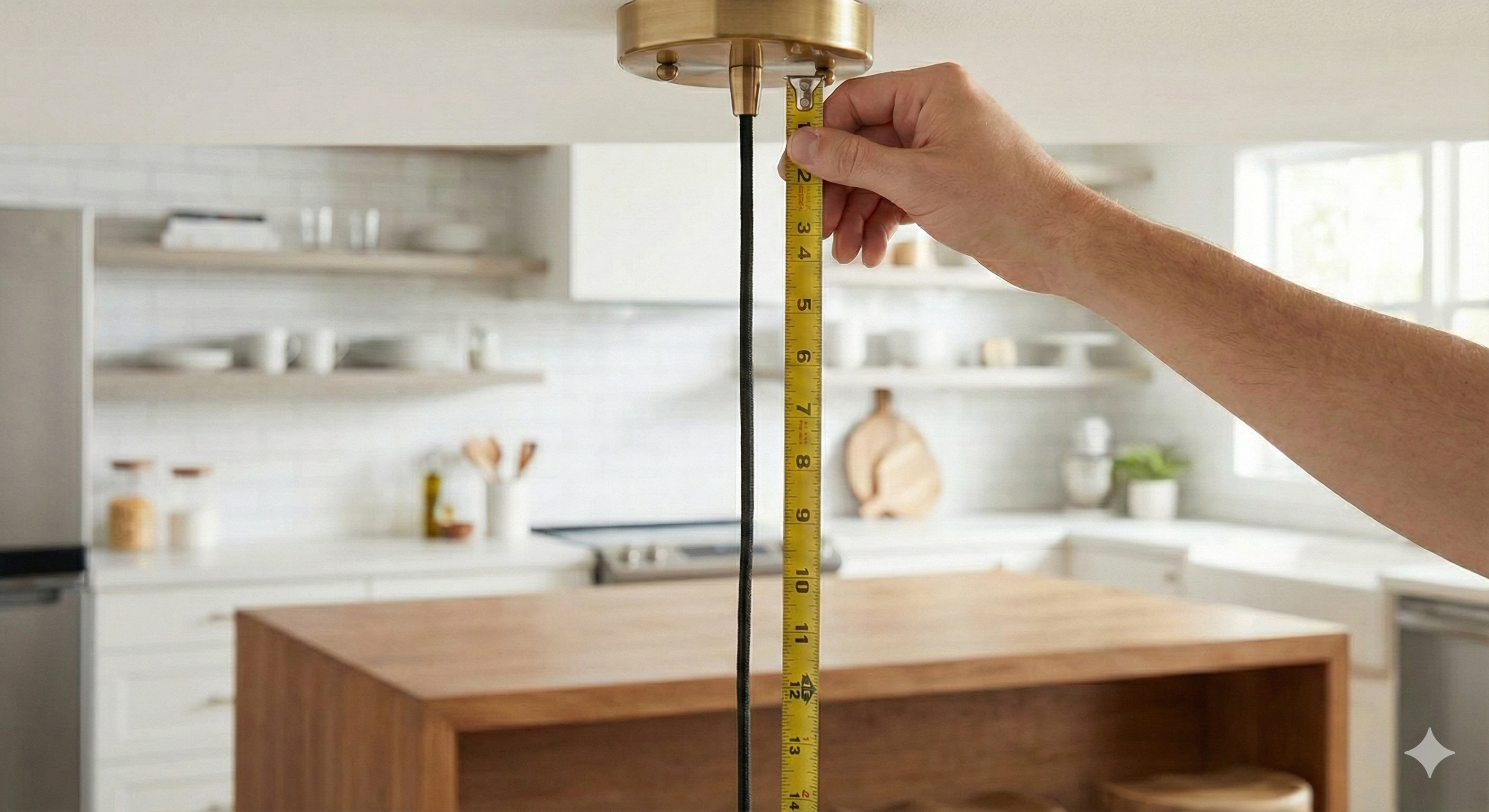
Even the perfect fixture can feel wrong if it’s placed incorrectly. When a light is hung too high, it loses its connection to the space and fails to illuminate the entry properly. When it’s too low, it disrupts movement and sightlines. As a general rule:

  • Keep at least 7 feet of clearance from floor to fixture
  • Ensure the light feels visually connected, not floating too high

In two-story foyers, placement becomes more visual than technical. Aligning your fixture with architectural elements, like a second-floor landing, creates a more cohesive look, especially when coordinating with stairway lighting.

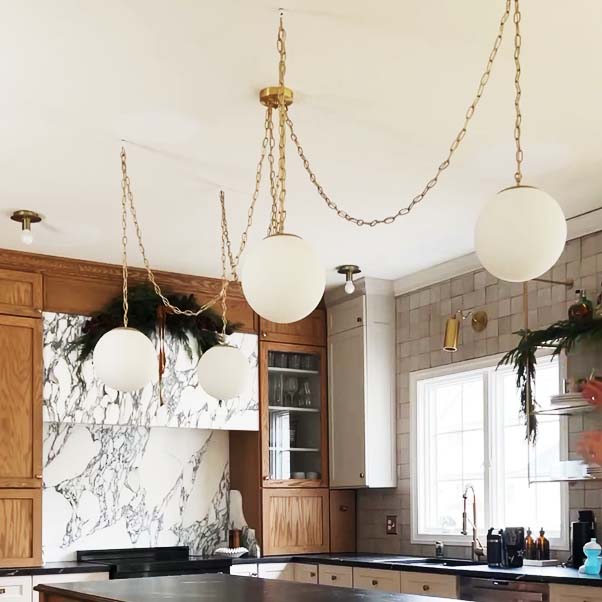
Real homes aren’t always perfectly symmetrical. Off-center ceiling boxes or awkward layouts are common, which is why flexible solutions matter. Thoughtful installing ceiling light fixture strategies, such as adjustable drops or swag designs, can help correct placement without major rewiring.

Mistake 4: Forgetting the Power of Dimmers

Lighting shouldn’t feel one-dimensional. Without dimmers, your foyer is stuck in a single mode, often brighter than necessary. That can feel harsh, especially in the evening when softer light would create a more welcoming atmosphere. Dimmers allow your entry foyer lighting to adapt:

  • Bright and functional during the day
  • Soft and ambient in the evening
  • Adjustable depending on mood or occasion

It’s a small upgrade with a big impact on how your home feels.

Mistake 5: Creating a Style Clash with Your Home's Architecture

A fixture might look beautiful on its own, but still feel wrong in your space. When lighting doesn’t align with your home’s architecture, it creates tension. A modern fixture in a traditional home or an ornate chandelier in a minimalist space can feel disconnected rather than intentional. Your entryway foyer lighting should reflect what’s already there:

  • Materials (wood, metal finishes, glass)
  • Architectural details
  • Overall design language of the home

Consistency is what makes a space feel calm and cohesive.

Mistake 6: Ignoring Bulb Color Temperature

Light is equally about brightness and one. The color of your bulbs has a direct impact on how your entry feels the moment you walk in.

  • Warm light (2700K-3000K): soft, inviting, comfortable
  • Cool light (4000K+): sharp, bright, often clinical

For most homes, warm light works best. It enhances materials, softens the space and makes your entry foyer lighting feel welcoming instead of sterile.

Mistake 7: Creating a 'Swiss Cheese' Ceiling with Too Many Recessed Lights

Recessed lighting is useful, but too much of it creates visual clutter. When a ceiling is filled with recessed lights, it loses focus. There’s no central point, no visual anchor, just scattered light. This becomes even more noticeable in entries that connect to stairwell lighting or long hallways, where cohesion matters.

A better approach:

  • Use a central or statement fixture as the focal point
  • Add recessed lighting only where needed
  • Let supporting lights enhance, not dominate, the space

A clear focal point makes your foyer feel intentional and complete.

What is the Best Lighting for a Foyer?

The best lighting depends on your layout as well as your style preferences. Different spaces require different solutions, especially when dealing with ceiling height, layout challenges or alignment with stairway lighting. Strong options include:

  • Swag chandeliers: Ideal for off-center ceiling boxes
  • Large canopy fixtures: Help cover imperfections and add scale
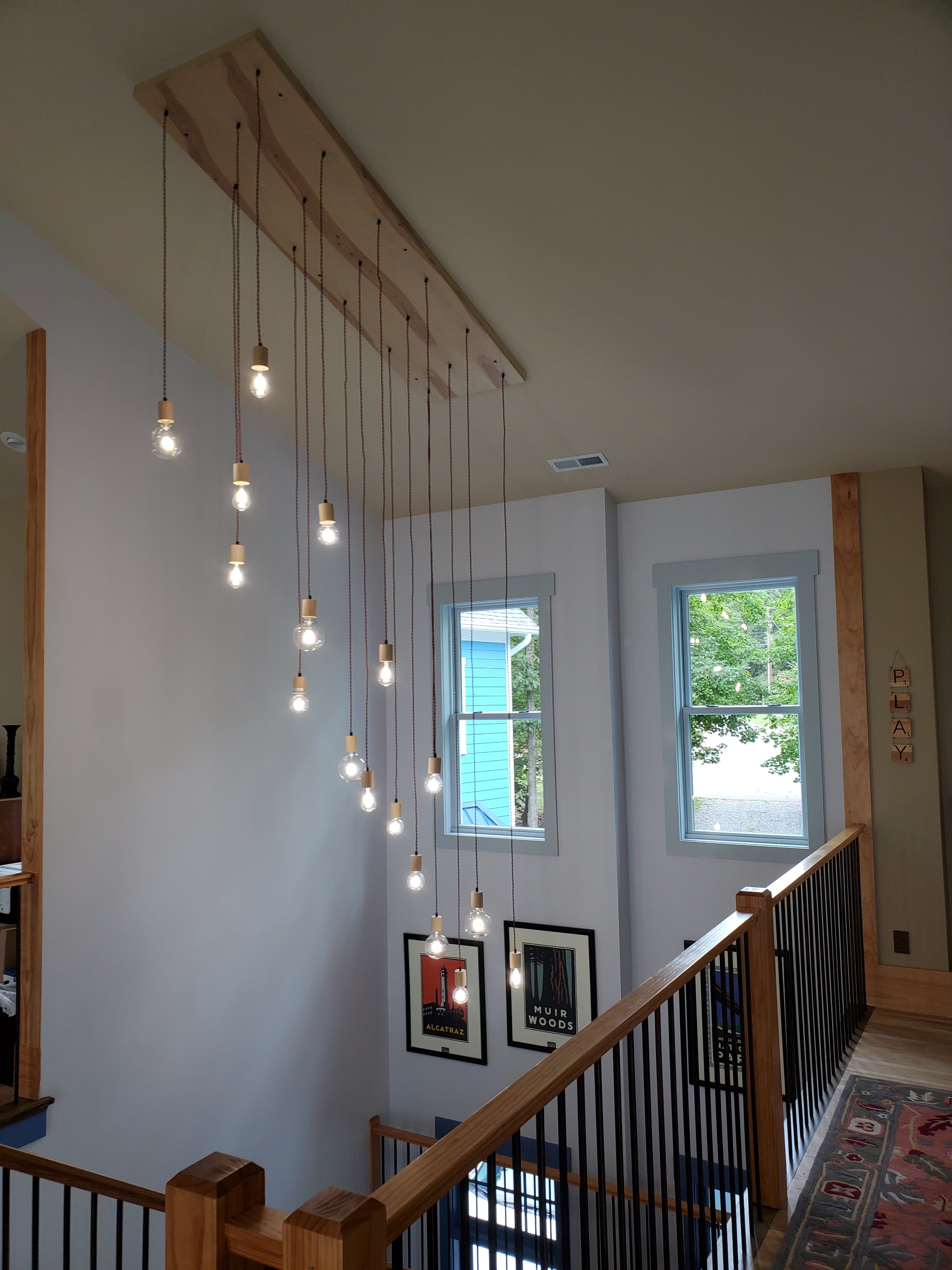
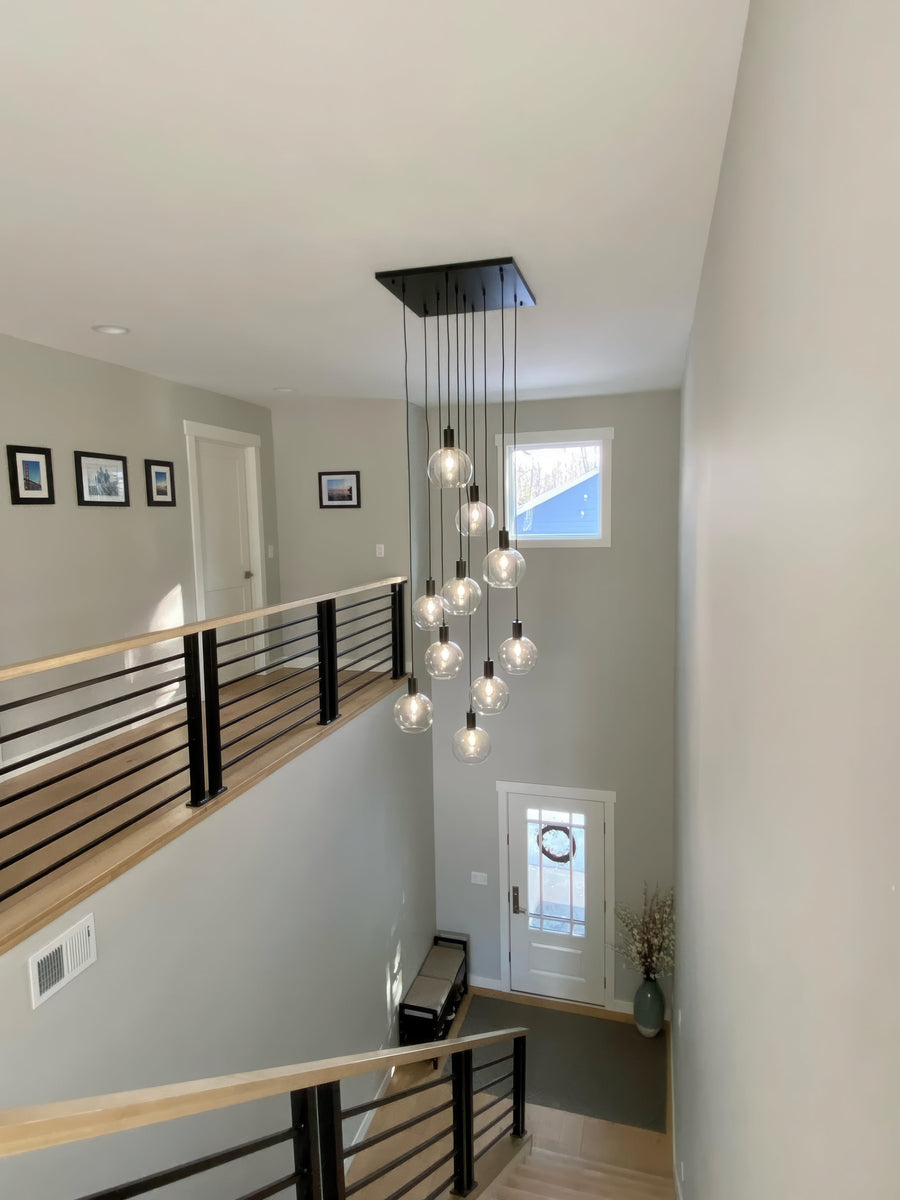
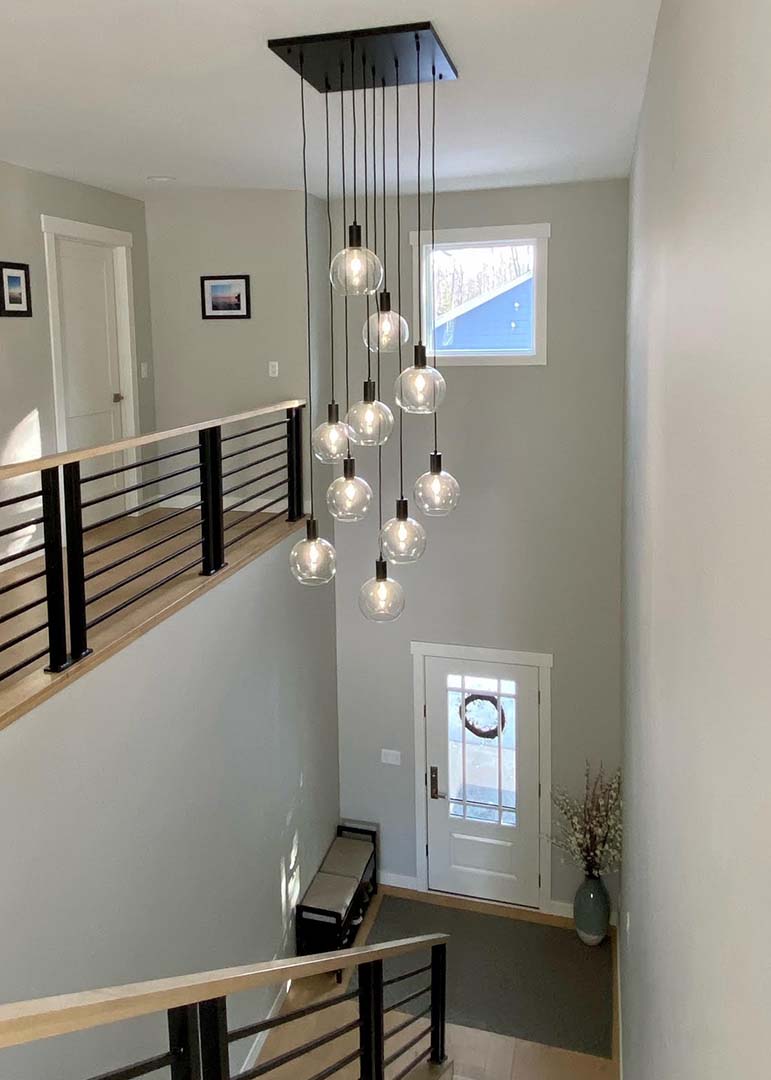
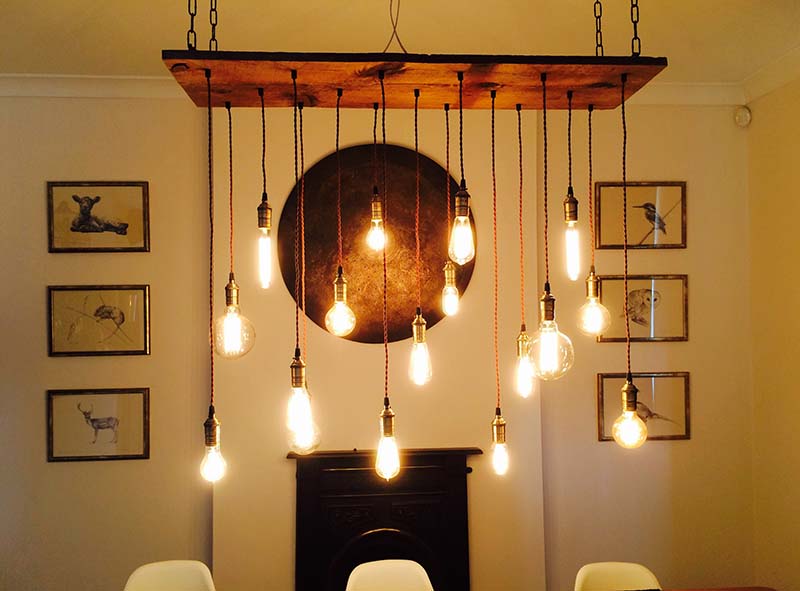
  • Cluster pendants: Perfect for tall or modern foyers needing vertical presence

Each of these works differently, but they all solve one core problem: creating balance and presence in your foyer lighting.

Can I use smart lighting in my foyer?

Absolutely, and it’s one of the easiest upgrades you can make. Smart lighting enhances convenience without requiring a full redesign. It allows for motion sensors that enable hands-free entry, scheduled lighting so your space is illuminated when you arrive home and custom “welcome” scenes created with smart bulbs. And because smart bulbs work with most fixtures, they integrate seamlessly into your existing entryway foyer lighting setup.

How can I update my foyer lighting on a budget?

You don’t need a full renovation to make a noticeable improvement. Small, strategic updates can completely change how your foyer feels. 

Replacing an outdated fixture, switching to warmer bulbs and adding dimmers for flexibility are all simple changes that have a significant impact. Even minor updates during installing ceiling light fixture projects can make your entry feel more intentional, balanced and inviting.

How is Foyer Lighting Different from Stairway or Entry Lighting?

Foyer lighting is about impact. It creates the first impression and acts as a focal point. In contrast, stairway lighting is more functional. It guides movement and connects spaces. 

In open layouts, these two should work together visually. A well-designed foyer flows naturally into the staircase, creating a cohesive experience. In longer or narrower entries, it’s important to avoid relying on a single central fixture. 

Instead, using multiple lights spaced evenly apart or incorporating wall sconces can help visually widen the space and create a more balanced flow. The goal of it is flow, not isolation.

Your Blueprint for a Perfectly Lit Welcome

A well-lit foyer doesn’t happen by accident. It comes down to a few key decisions done right. Getting the scale right, placing fixtures intentionally and building in flexibility with dimmers and smart features all play a crucial role in the final result. 

Most importantly, you need to understand this: lighting isn’t just functional. It also has an emotional aspect to it. When your entry foyer lighting is done right, your home immediately feels more welcoming, more balanced and more complete.

FAQs - Frequently Asked Questions

How big should a foyer light fixture be?

Add the length and width of your foyer (in feet) and use that number (in inches) as your fixture diameter. This helps achieve the right foyer lighting size.

How low should a chandelier hang in a foyer?

Most fixtures should hang at least 7 feet above the floor. In taller spaces, align the fixture with architectural elements for better visual balance.

What can I do with an off-center ceiling light box?

Use swag fixtures or adjustable designs to reposition the visual center without relocating wiring, especially helpful during installing ceiling light fixture projects.

What lighting works best for a two-story foyer?

Fixtures with vertical presence (like multi-tier chandeliers or cluster pendants) work best, especially when coordinating with stairwell lighting.


Tell us about your space and what you're envisioning

We'll guide you through layout, ceiling height, finish selections, and the elements that bring it all together.

This site is protected by hCaptcha and the hCaptcha Privacy Policy and Terms of Service apply.